The Rise of AI Servers: New High-Speed Storage Requirements for AI Workstations and Edge Data Centers

As generative AI, large language models (LLMs), and AI inference applications continue to scale, the architecture of AI servers and edge data centers is being fundamentally redefined. Performance conversations that once centered exclusively on compute — GPUs and CPUs — are now extending into the storage layer. As compute speeds accelerate, storage that can’t keep pace quickly becomes the new bottleneck in the system. For buyers of memory and storage components, understanding this shift is the first step toward smarter sourcing and procurement decisions.

1. Why AI Workloads Demand a New Storage Approach

AI workloads generally fall into two distinct phases, each placing very different demands on storage:

  • Model Training: Involves processing massive datasets with repeated read/write cycles and frequent checkpointing, requiring high write endurance and sustained bandwidth throughput.
  • Model Inference: Prioritizes low latency and random read performance, especially in real-time applications like chatbots and image recognition, where response speed directly shapes the end-user experience.

This means storage can no longer be treated as a one-size-fits-all component — selection must be tailored to the specific AI use case.

2. Key Technical Specifications AI Buyers Should Evaluate

When selecting storage components for AI servers, buyers should focus on the following specifications:

  • Bandwidth: Large AI training datasets place heavy demand on read/write bandwidth. If storage can’t keep up, expensive GPU resources sit idle waiting for data.
  • IOPS (Input/Output Operations Per Second): High IOPS is essential for maintaining stable response times in inference services and multi-tasking environments.
  • Latency: Real-time applications — autonomous driving, financial trading — are highly latency-sensitive, where even microsecond differences affect system performance.
  • Endurance (DWPD / TBW): The intensive read/write cycles of AI training accelerate wear on storage components. Higher-endurance specifications help avoid the maintenance costs and downtime risk of frequent replacements.

3. Why PCIe Gen5 / NVMe Matters for AI Workloads

As GPU performance continues to climb, legacy SATA and PCIe Gen3 interfaces can no longer keep up with data throughput demands. PCIe Gen5 NVMe SSDs — offering significantly higher bandwidth and lower latency — are quickly becoming the standard for AI-focused systems, particularly in workloads that require frequent access to large model parameters or training datasets.

DATO Technology’s PCIe Gen5 lineup illustrates how these specification differences translate into real-world AI performance gains:

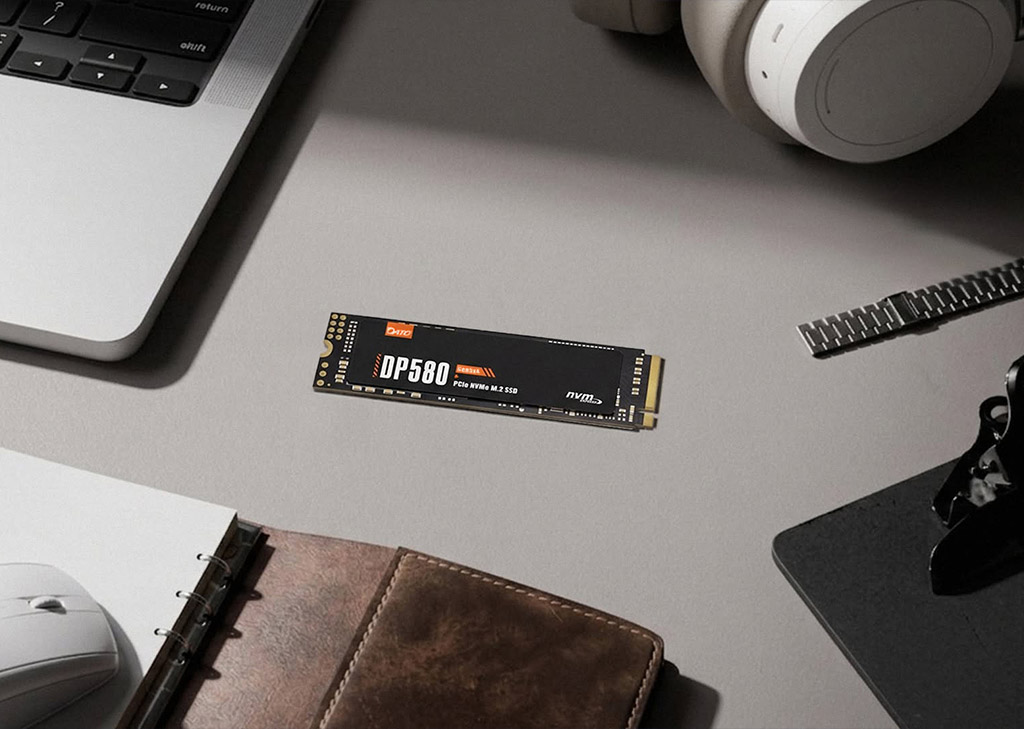
  • DATO DP580 (M.2 2280, PCIe Gen5x4 NVMe SSD): Delivers sequential read/write speeds up to 9,300/7,900MB/s — roughly double the bandwidth of Gen4 drives. Built for AI development and inference workstations that need to rapidly load model parameters and switch between datasets, the DP580 supports NVMe 2.0 for improved compatibility and power efficiency, and features graphene cooling to maintain stability under sustained high-load computing.
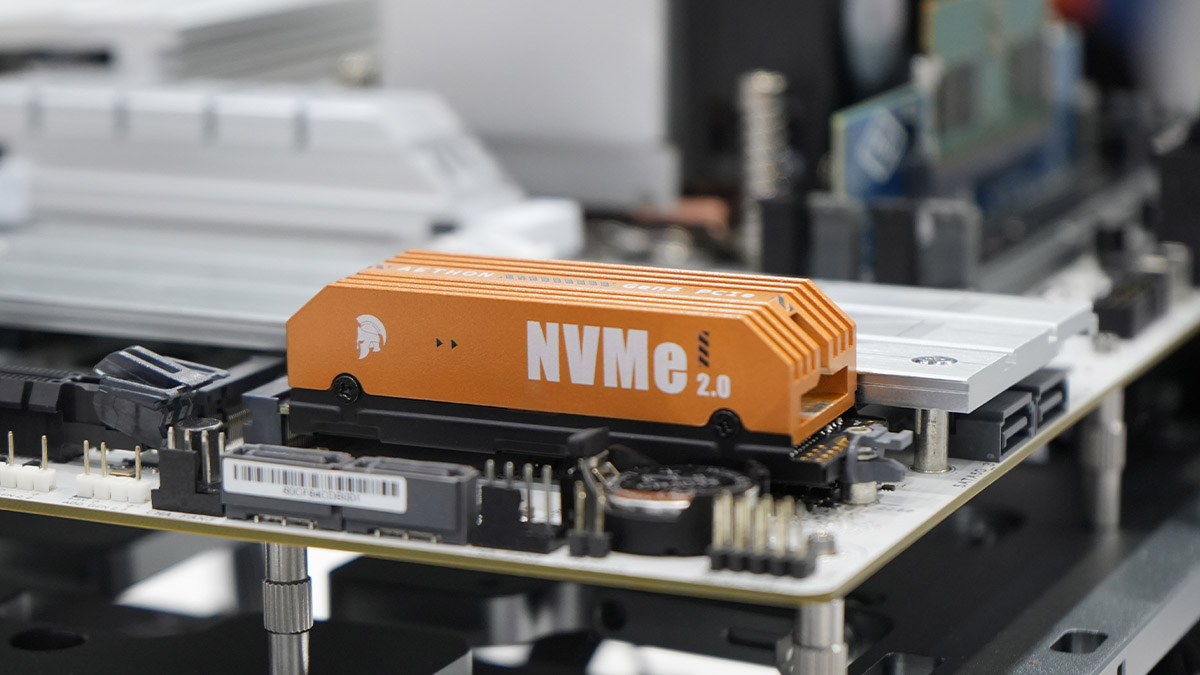
  • ARES AETHON (M.2 2280, PCIe Gen5x4 NVMe SSD with integrated heatsink): Reaches read/write speeds up to 12,000/10,000MB/s. Paired with a built-in heatsink and durable 3D NAND, it’s well-suited for 8K video processing, CAD workloads, and AI virtualization environments where bandwidth and stability under sustained load are critical — helping minimize compute resource idle time caused by storage bottlenecks.

These high-bandwidth SSDs are particularly well-positioned for deployment in edge AI workstations, AI development machines, and local inference servers, functioning as a hot-data cache layer that accelerates model loading and data access.
4. Memory Bandwidth: The Other Half of AI Performance

Storage isn’t the only factor shaping AI performance — memory bandwidth is equally critical, especially for local AI workstations and compact edge systems:

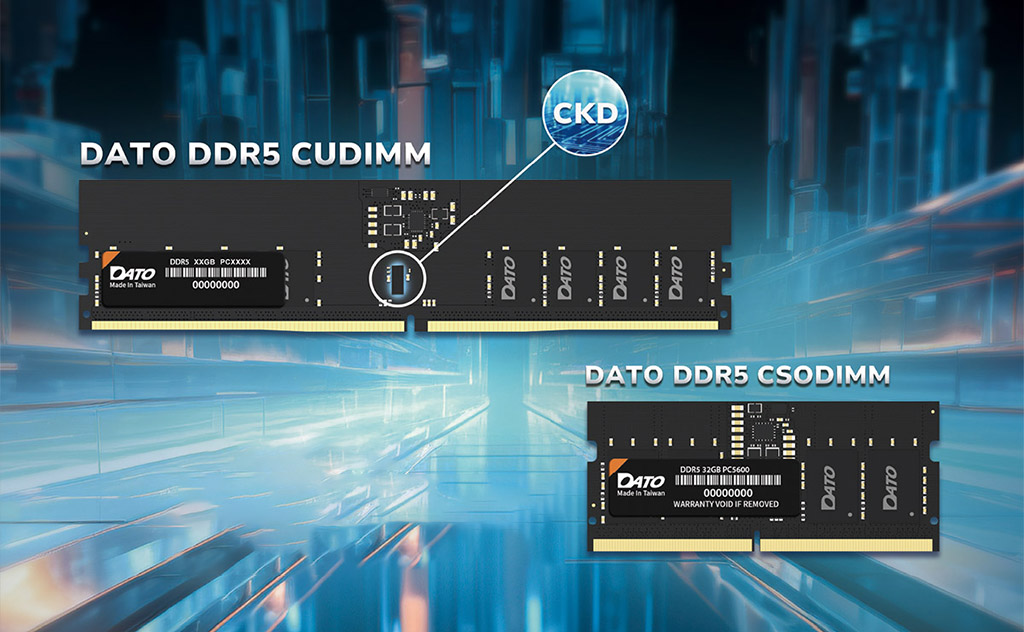
  • DATO DDR5 CUDIMM: Clocked up to DDR5-8000MHz, this 288-pin module integrates a CKD (Client Clock Driver) chip directly on board to overcome signal degradation at extreme frequencies. It’s built for AI and creator workstations that require stable, high-bandwidth memory performance for AI-accelerated computing and content creation workloads.
  • DATO DDR5 CSODIMM: Brings the same class of high-frequency stability into a compact 262-pin SO-DIMM form factor, also reaching speeds up to DDR5-8000MHz. Designed for space-constrained Mini PCs, SFF workstations, and AI-capable laptops, it enables desktop-class memory performance for local AI inference and content creation in mobile and compact form factors.

For buyers deploying edge or client-side AI inference and fine-tuning of smaller models, memory bandwidth and storage bandwidth should be planned together — a bottleneck in either one will limit overall system performance.

5. Common Storage Architectures in AI Computing Environments

Most AI computing environments adopt a tiered storage strategy, allocating storage resources based on data access frequency and criticality:

  • Local high-speed cache layer: Built-in high-speed NVMe SSDs handle the “hot” data required for real-time computation.
  • Shared storage pool: Used to store large training datasets, balancing capacity with cost efficiency.
  • Cold data archive layer: Stores infrequently accessed historical data, prioritizing capacity and cost over speed.

When planning storage architecture, buyers should size each tier according to their specific application — over-investing in high-speed storage wastes budget, while under-investing creates performance bottlenecks.

6. Three Selection Pitfalls AI Storage Buyers Often Overlook

  • Focusing on capacity while ignoring endurance: AI training workloads generate far more write volume than typical applications. Selecting storage based on capacity alone often underestimates replacement frequency and total cost of ownership (TCO).
  • Overlooking supply chain stability: AI projects typically involve long-term scaling plans. A supplier that can’t guarantee stable long-term supply and consistent specifications introduces ongoing maintenance and compatibility risk.
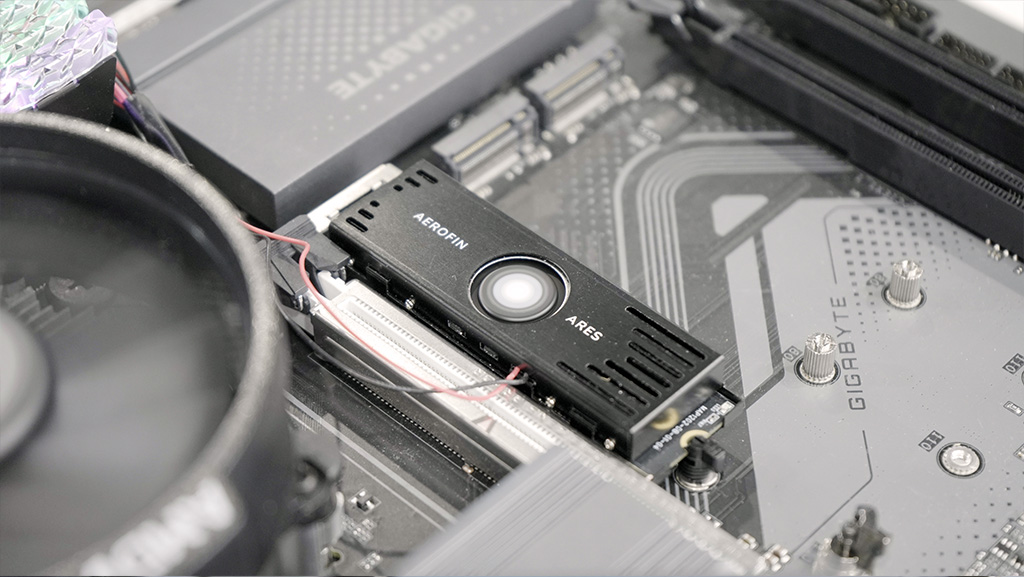
  • Underestimating thermal design — and the resulting performance throttling: PCIe Gen5 SSDs generate significantly more heat under sustained load. Without adequate thermal design or chassis space, drives are prone to thermal throttling that prevents them from reaching rated performance. The ARES AEROFIN (M.2 2280 PCIe Gen5x4 Active SSD Cooler) addresses this directly — its active micro-fan cooling design reduces peak SSD temperatures by up to 40%, allowing sustained performance even at speeds up to 14,000MB/s. At just 1cm thick, it fits without interfering with the GPU or other components, making it well-suited for space-constrained desktop PC builds and mainstream motherboards. (Currently designed for desktop PC systems only.)

7. How DATO Technology Supports AI Server and Edge Computing Buyers

DATO Technology offers a full memory and storage product portfolio — including DRAM, DDR5 CUDIMM/CSODIMM, high-speed NVMe SSDs, SSD thermal solutions, Portable SSDs, USB flash drives, and microSD cards — engineered to meet the demands of AI servers, edge computing, and AI workstation environments at every application tier:

    • High-speed NVMe SSDs (DP580 / AETHON): Delivering 9,300/7,900MB/s and up to 12,000/10,000MB/s respectively, built for the bandwidth and low-latency demands of AI development, model loading, and inference services.
    • High-frequency DDR5 memory (CUDIMM / CSODIMM): Clocked up to DDR5-8000MHz across both desktop and laptop/Mini PC form factors, providing the memory bandwidth AI workstations and creator systems need.
    • Active SSD cooling solutions (AEROFIN): Keeping storage performance stable under sustained high-load AI applications, preventing thermal throttling from degrading system output.
    • Flexible sampling and qualification support: Small-batch testing and validation support for buyers deploying new system architectures, reducing the risk of new platform integration.
    • Stable, scalable supply chain: Reliable long-term supply planning to support the scaling needs of ongoing AI projects.

Conclusion

The rise of AI servers and edge computing is redefining the standards for storage selection — shifting the conversation from raw capacity alone to a balanced consideration of bandwidth, latency, and endurance. For buyers, understanding these evolving requirements early — and partnering with a supplier that combines technical expertise with supply flexibility — is a critical step toward capturing opportunity in the AI era.

If you’re evaluating high-speed memory and storage solutions for an AI server, edge computing, or AI workstation project, contact DATO Technology to get product recommendations tailored to your application.

From AI-Empowered Creation to Ultimate Gaming Speed. Inquire About DATO’s COMPUTEX 2026 Lineup.