As GPU performance continues to climb, legacy SATA and PCIe Gen3 interfaces can no longer keep up with data throughput demands. PCIe Gen5 NVMe SSDs — offering significantly higher bandwidth and lower latency — are quickly becoming the standard for AI-focused systems, particularly in workloads that require frequent access to large model parameters or training datasets.
DATO Technology’s PCIe Gen5 lineup illustrates how these specification differences translate into real-world AI performance gains:
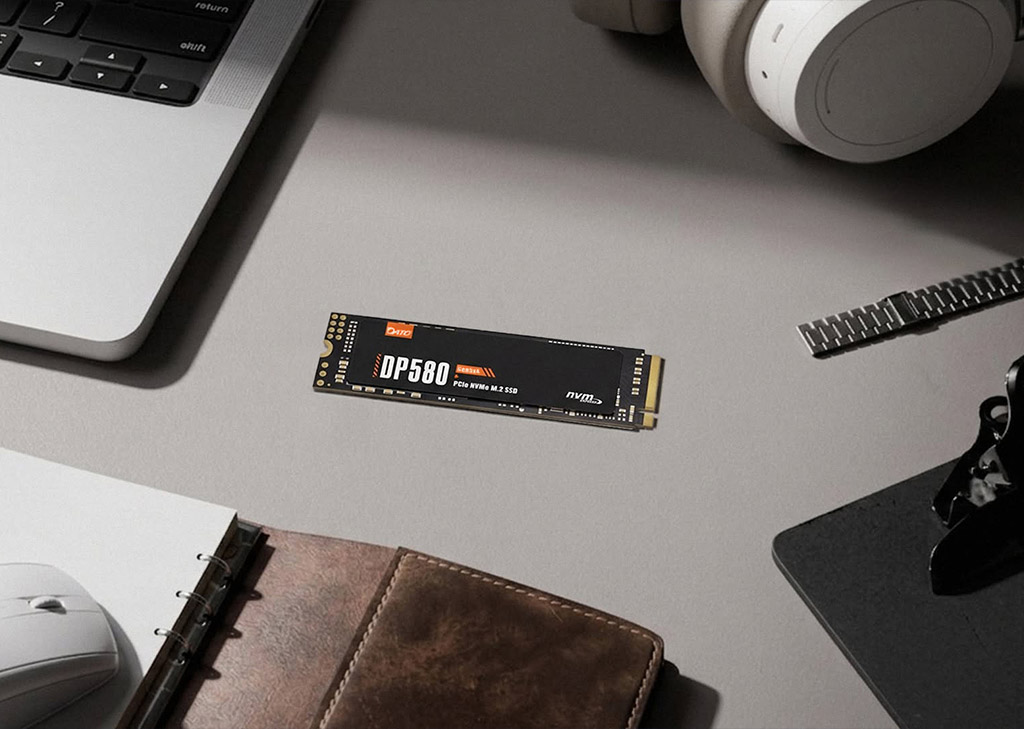
- DATO DP580 (M.2 2280, PCIe Gen5x4 NVMe SSD): Delivers sequential read/write speeds up to 9,300/7,900MB/s — roughly double the bandwidth of Gen4 drives. Built for AI development and inference workstations that need to rapidly load model parameters and switch between datasets, the DP580 supports NVMe 2.0 for improved compatibility and power efficiency, and features graphene cooling to maintain stability under sustained high-load computing.
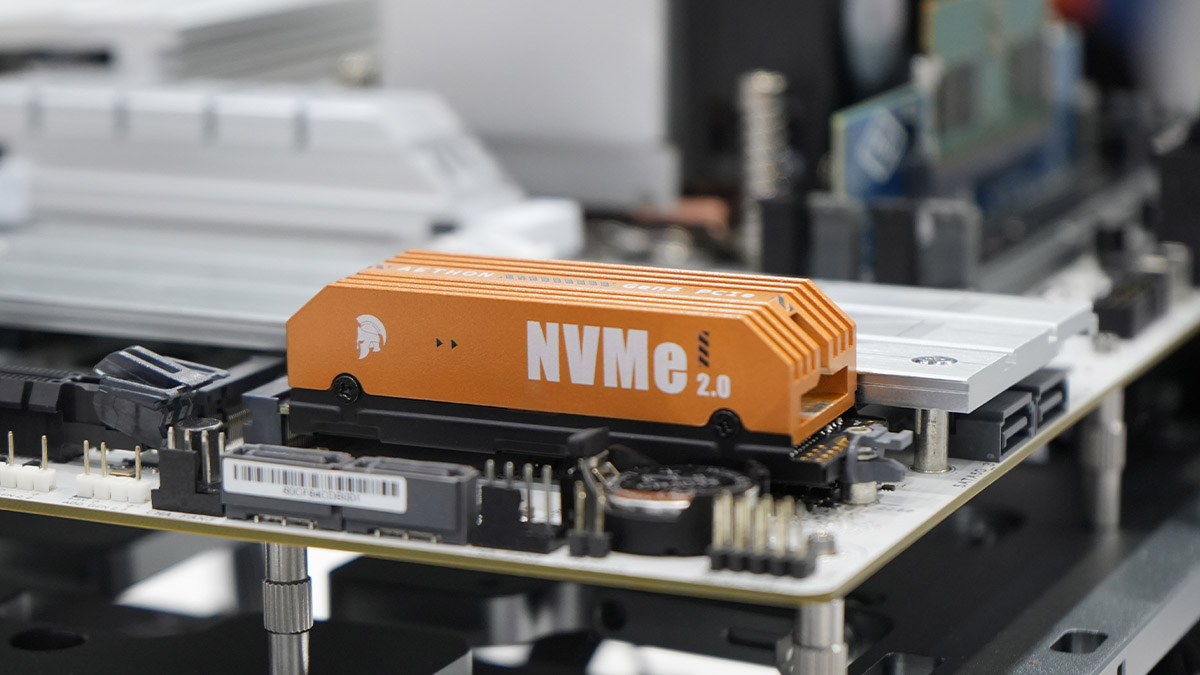
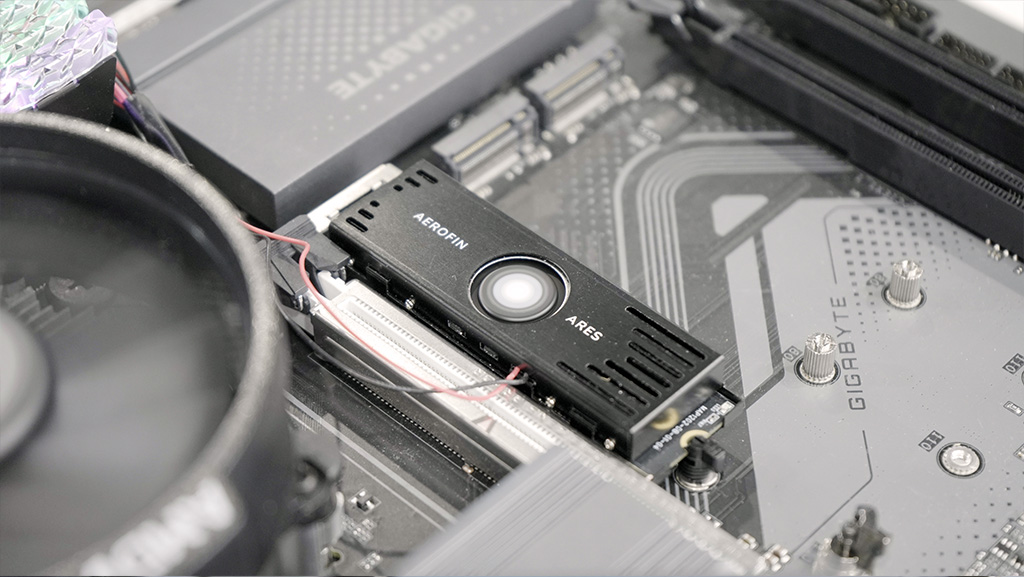
- ARES AETHON (M.2 2280, PCIe Gen5x4 NVMe SSD with integrated heatsink): Reaches read/write speeds up to 12,000/10,000MB/s. Paired with a built-in heatsink and durable 3D NAND, it’s well-suited for 8K video processing, CAD workloads, and AI virtualization environments where bandwidth and stability under sustained load are critical — helping minimize compute resource idle time caused by storage bottlenecks.
These high-bandwidth SSDs are particularly well-positioned for deployment in edge AI workstations, AI development machines, and local inference servers, functioning as a hot-data cache layer that accelerates model loading and data access.